Hi, I'm Gary Wu, a financial analyst in the Bay Area.

Most finance analysts can't build software, and most people who build software don't know finance. I do both. On one side: budgets, forecasts, variance analysis, month-end close, three-statement models. On the other: code, automation and AI agents. I use the second to make the first faster, clearer and harder to get wrong. Here's my work.

At work

For the past four years I've been a financial analyst at a Bay Area housing services organization, with full responsibility for a portfolio of 25 programs: the annual budget, the year-end forecast, the monthly variance analysis, the month-end close, and billing our funders every month. I also build the tools we do this work with.

When my monthly variance analysis flagged a projected overspend early, I recommended moving money across programs; leadership adopted it and avoided a mid-year gap. My year-end forecasts showed funding shortfalls before they hit, so leadership could adjust hiring and funding in time.

Two of the systems I built are below, rebuilt here on made-up data; the real numbers are confidential.

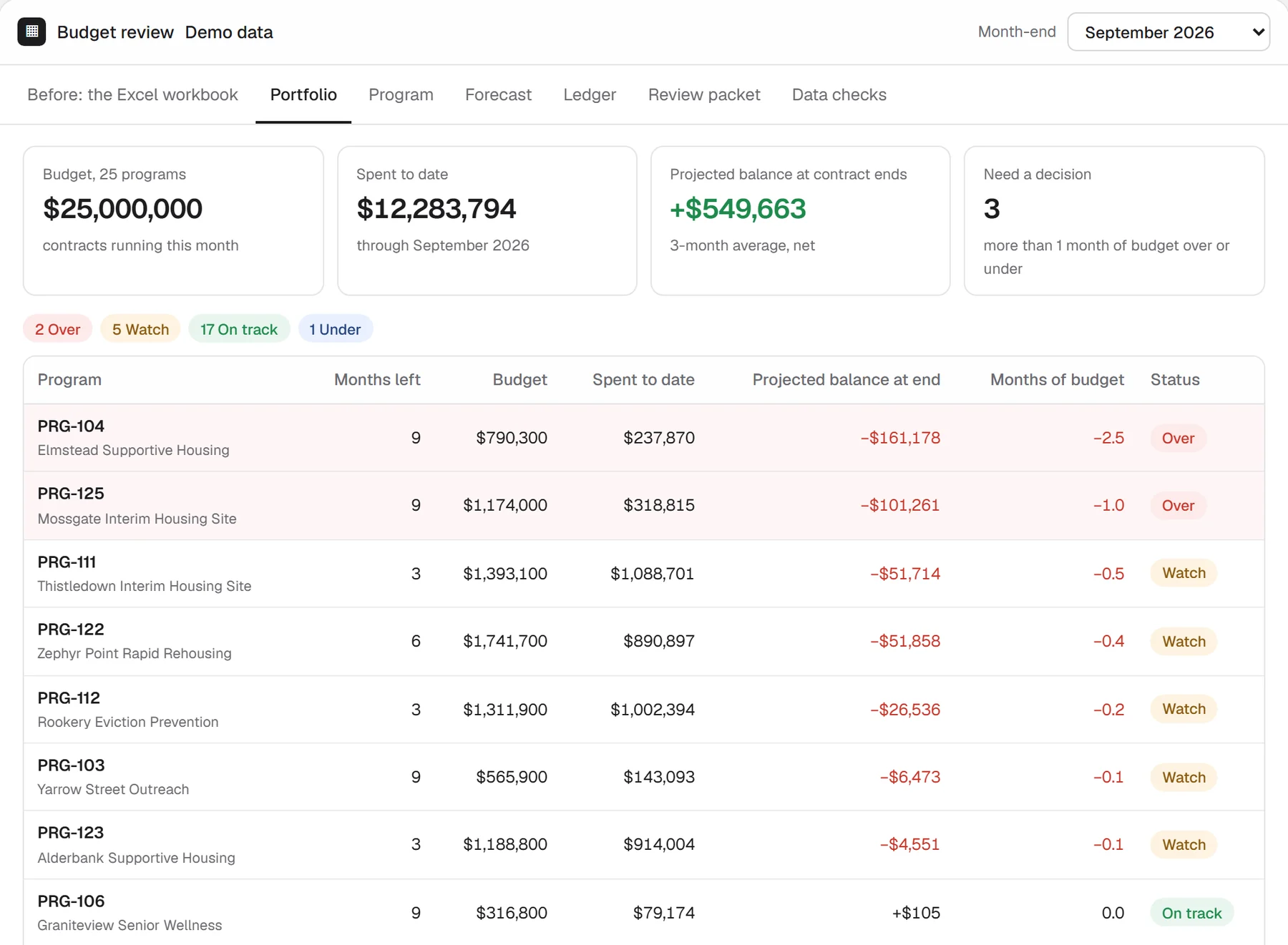
The budget review dashboard's Portfolio view, on demo data: budget, spend to date, projected balance and status for every program.
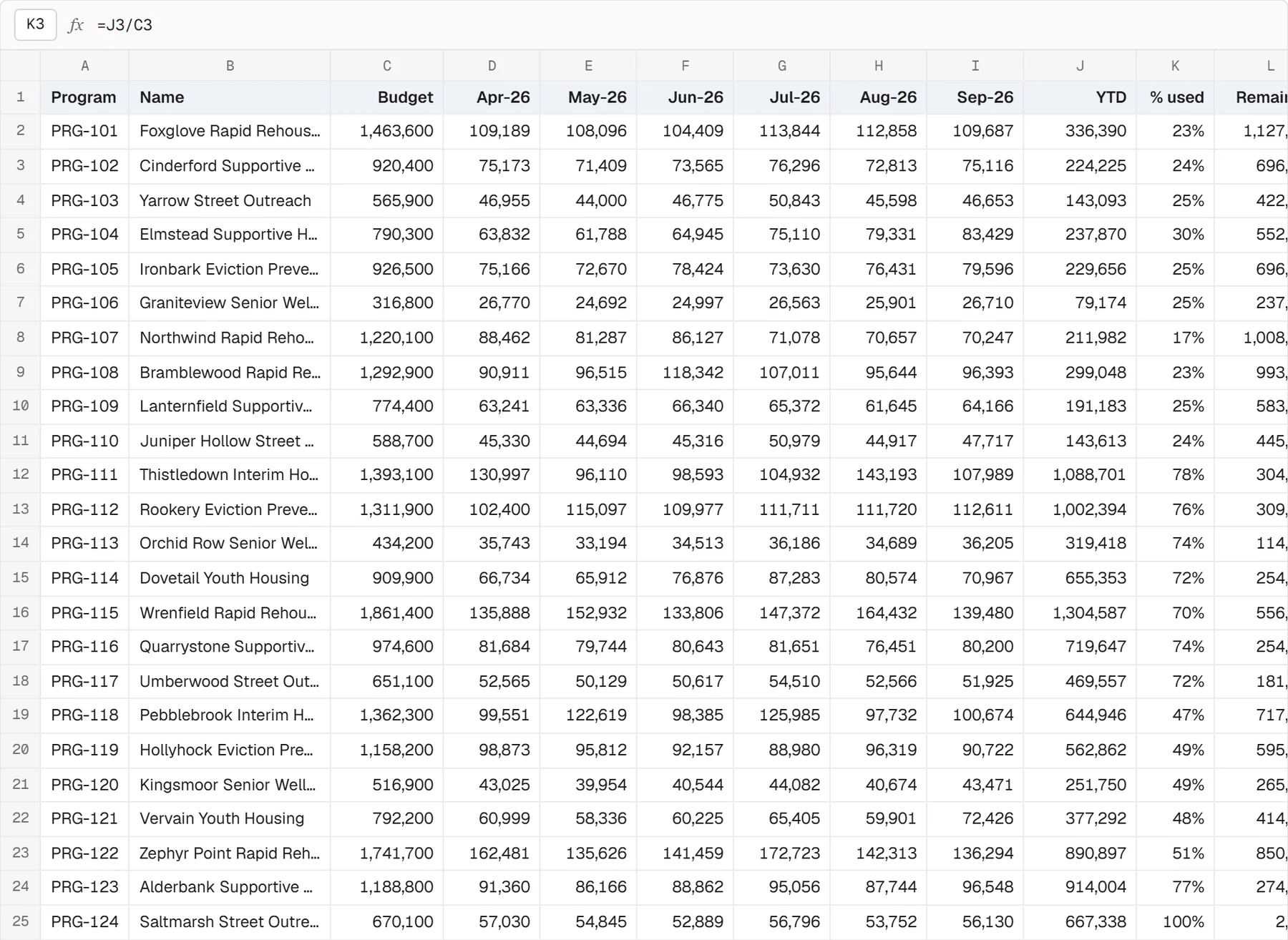
The old Excel workbook's Trending tab, rebuilt on the same demo data: one row per program with budget, the last six months, year to date and the remaining balance.

Budget review dashboard

The live dashboard our monthly budget review runs on, rebuilt here on made-up data. It shows how I turned an Excel workbook pasted in by hand into a live system that leadership and program managers use every day.

  • Reporting and dashboards
  • Forecasting
  • SQL
Open the dashboard
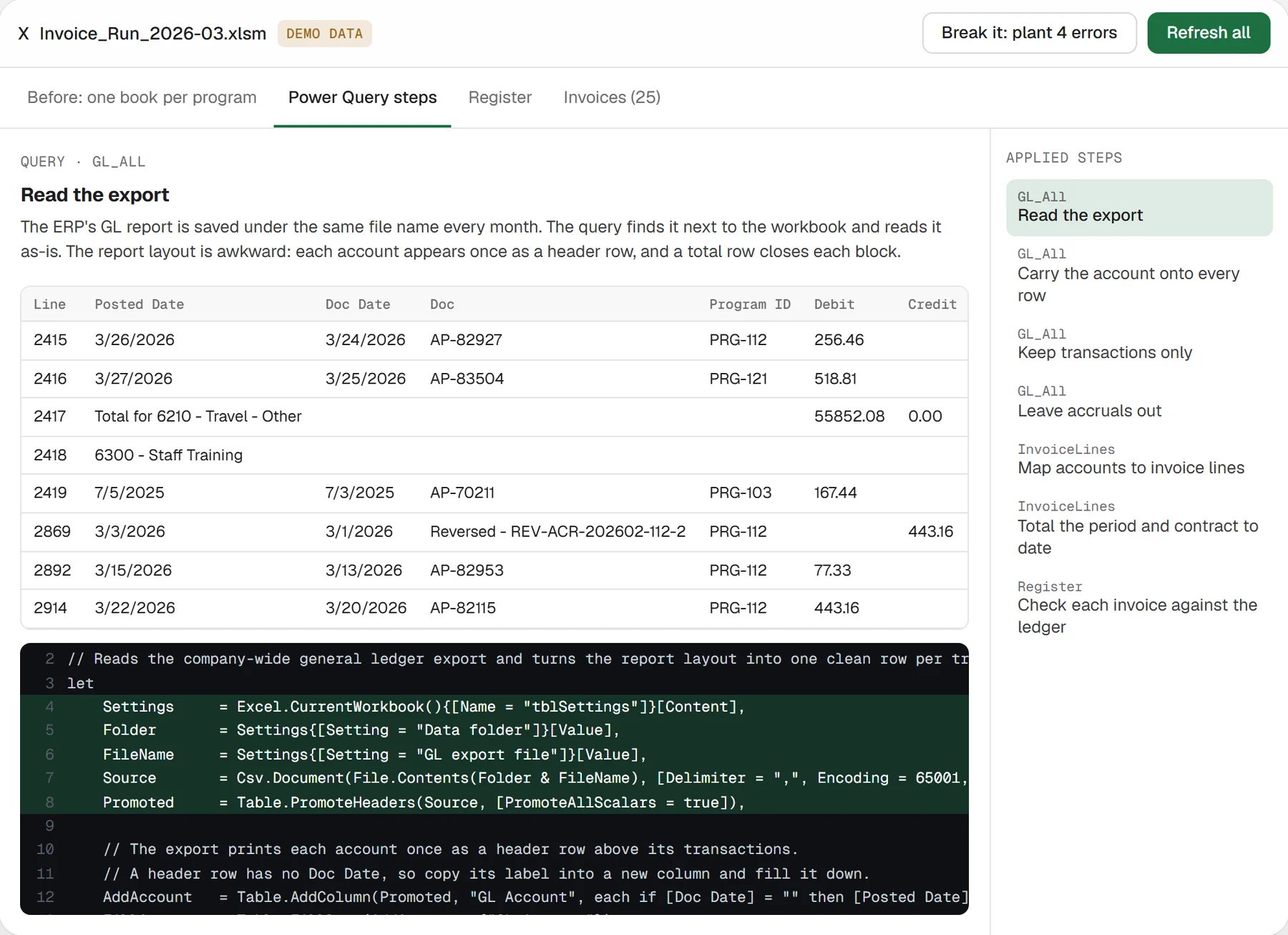
The invoicing workbook's Power Query view, on demo data: the export being read, the applied steps from export to checked invoice, and the M code.

Invoicing automation

The Power Query and Python pipeline behind our month-end invoicing, rebuilt here on made-up data. It shows how I redesign a process instead of automating the old one: one ledger export, one staffing file, and a check on every invoice before it goes out.

  • Automation
  • Month-end close
  • Controls
Open the workbook

Other projects

Outside my job: models built on public filings, public data and one made-up company, and two products of my own.

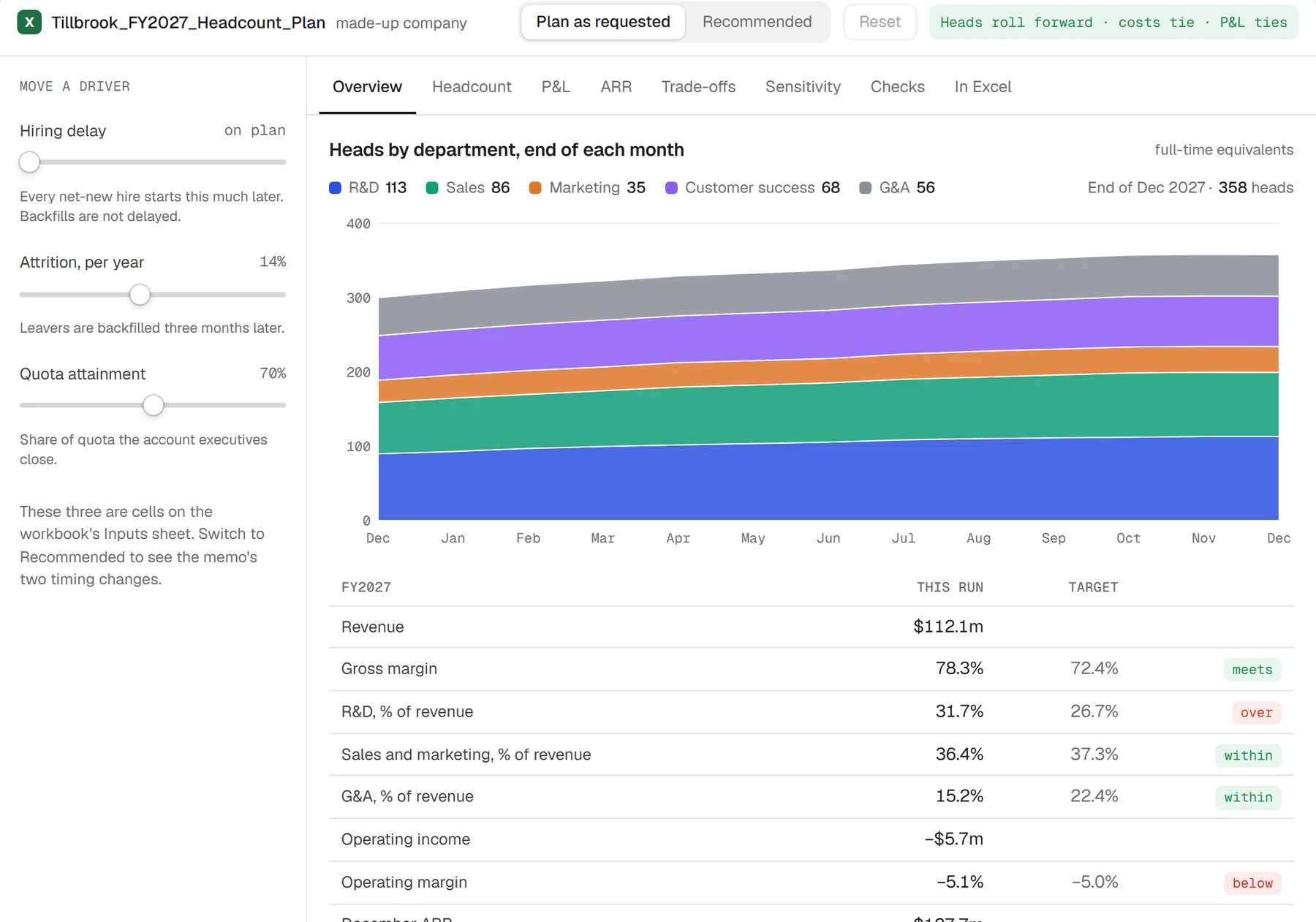
The FY2027 headcount and opex plan for a made-up 300-person software company: heads by department, the driver sliders and the plan's checks.

FY2027 headcount and opex plan

A driver-based annual hiring and spending plan for a made-up software company of about 300 people, with a one-page recommendation memo. It shows headcount and opex planning, scenario and sensitivity work, and writing a decision for executives.

  • Headcount and opex planning
  • Driver-based modeling
  • Executive memos
Open the plan
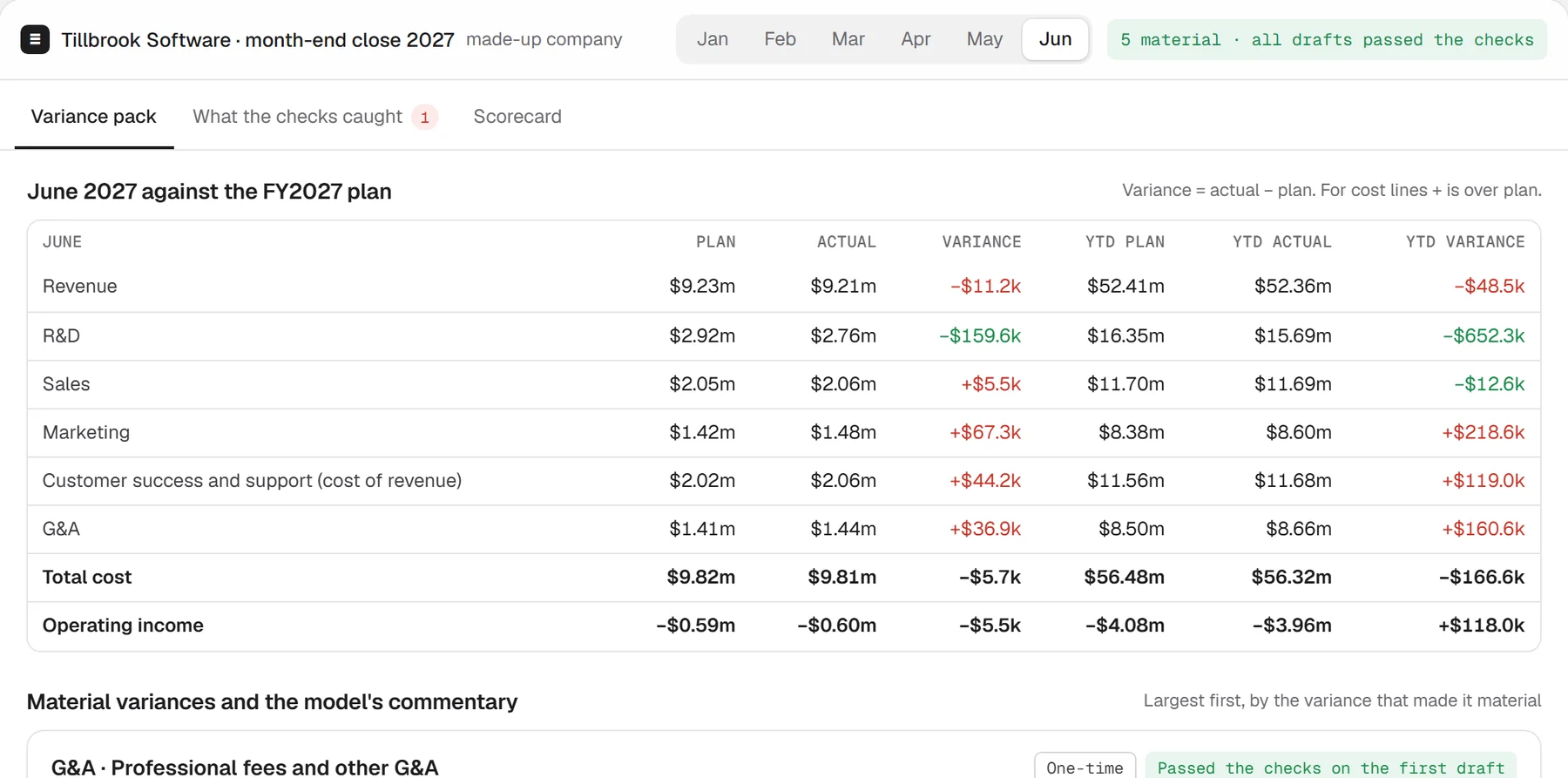
The month-end variance pack for a made-up software company: each material variance against plan with its drafted commentary and the checks it passed.

Month-end variance commentary, automated

A month-end variance pipeline for a made-up software company: it computes every variance against plan, a model drafts the commentary, and checks tie each number back to the books. It shows automating the close with controls, and knowing when the machine is wrong.

  • Variance analysis
  • Automation
  • Controls
Open the pipeline
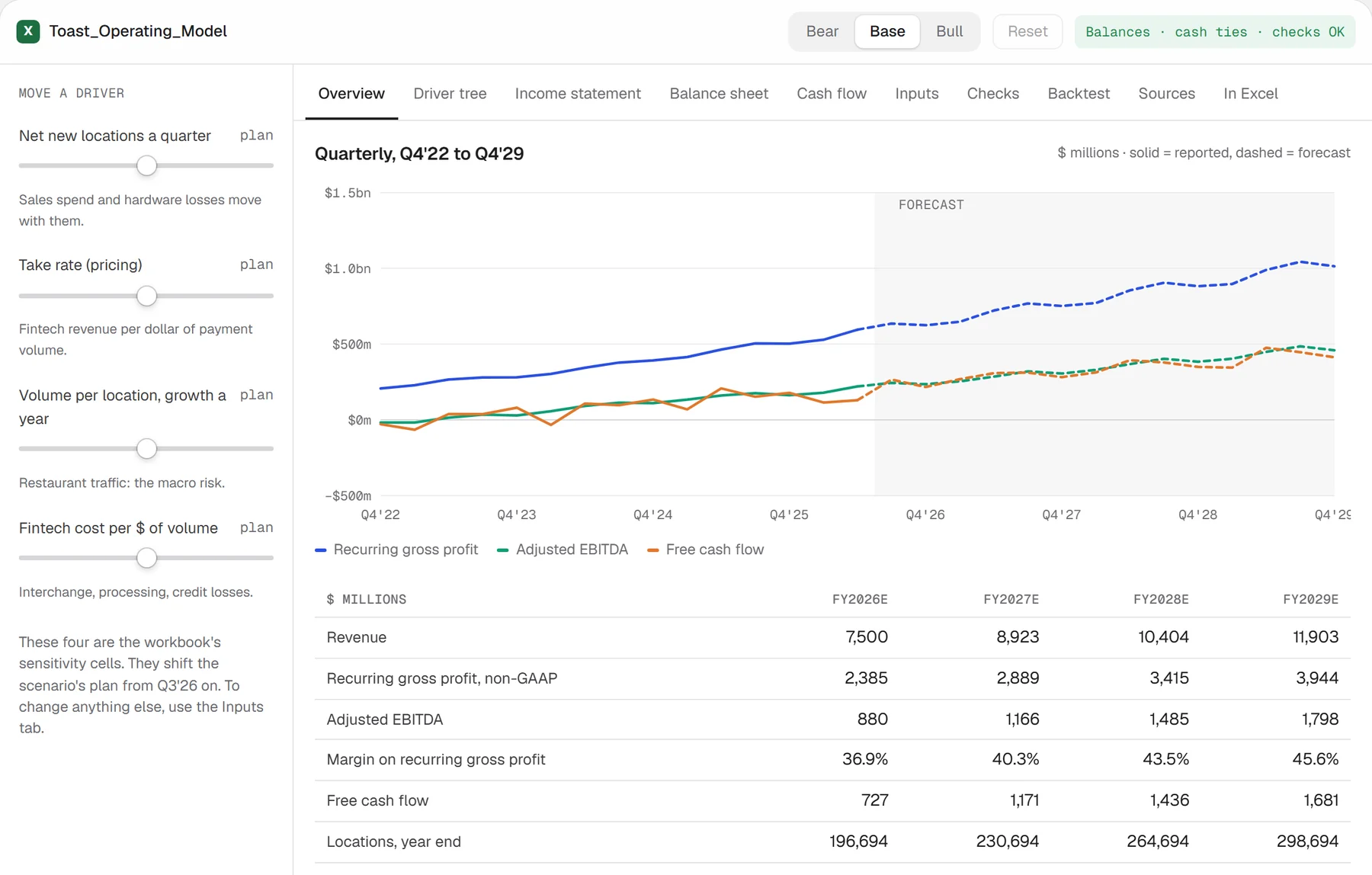
The Toast operating model with its driver sliders, scenarios, the quarterly chart and the FY2026 to FY2029 summary.

Toast operating model

A quarterly three-statement model of Toast, the restaurant software company, built from its SEC filings, with scenarios and checks. It shows how I break a business into the drivers that decide its profit and forecast them.

  • Financial modeling
  • Forecasting
  • Unit economics
Open the model
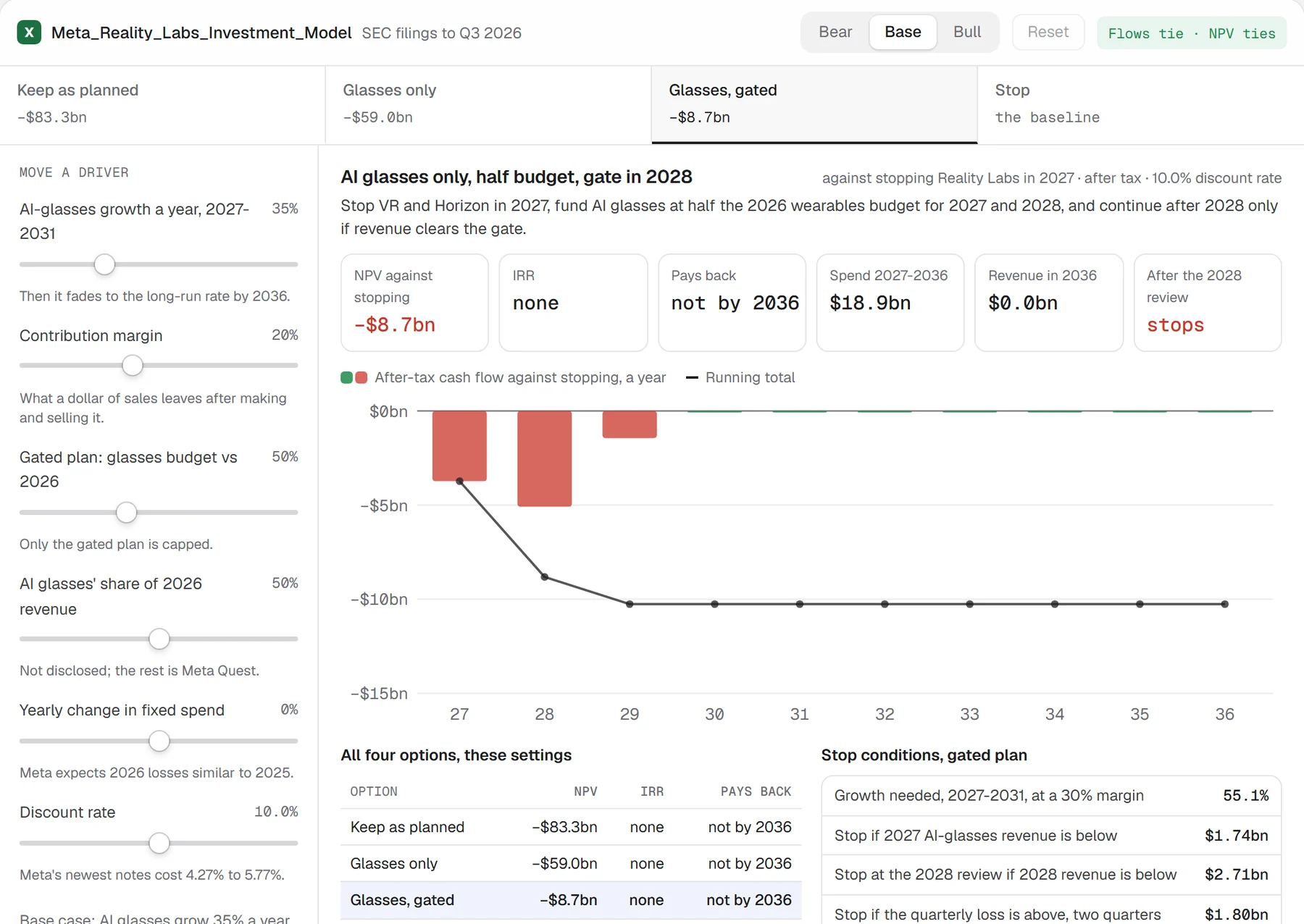
The Reality Labs investment model: the four options against stopping, the scenario switch and the driver sliders.

Reality Labs investment memo

A two-page decision memo on whether Meta should keep funding Reality Labs, with the Excel model under it, built from Meta's SEC filings. It shows building an investment case: payback, scenarios, and the conditions that would make me stop.

  • Business cases and ROI
  • Executive memos
  • Scenario modeling
Open the memo
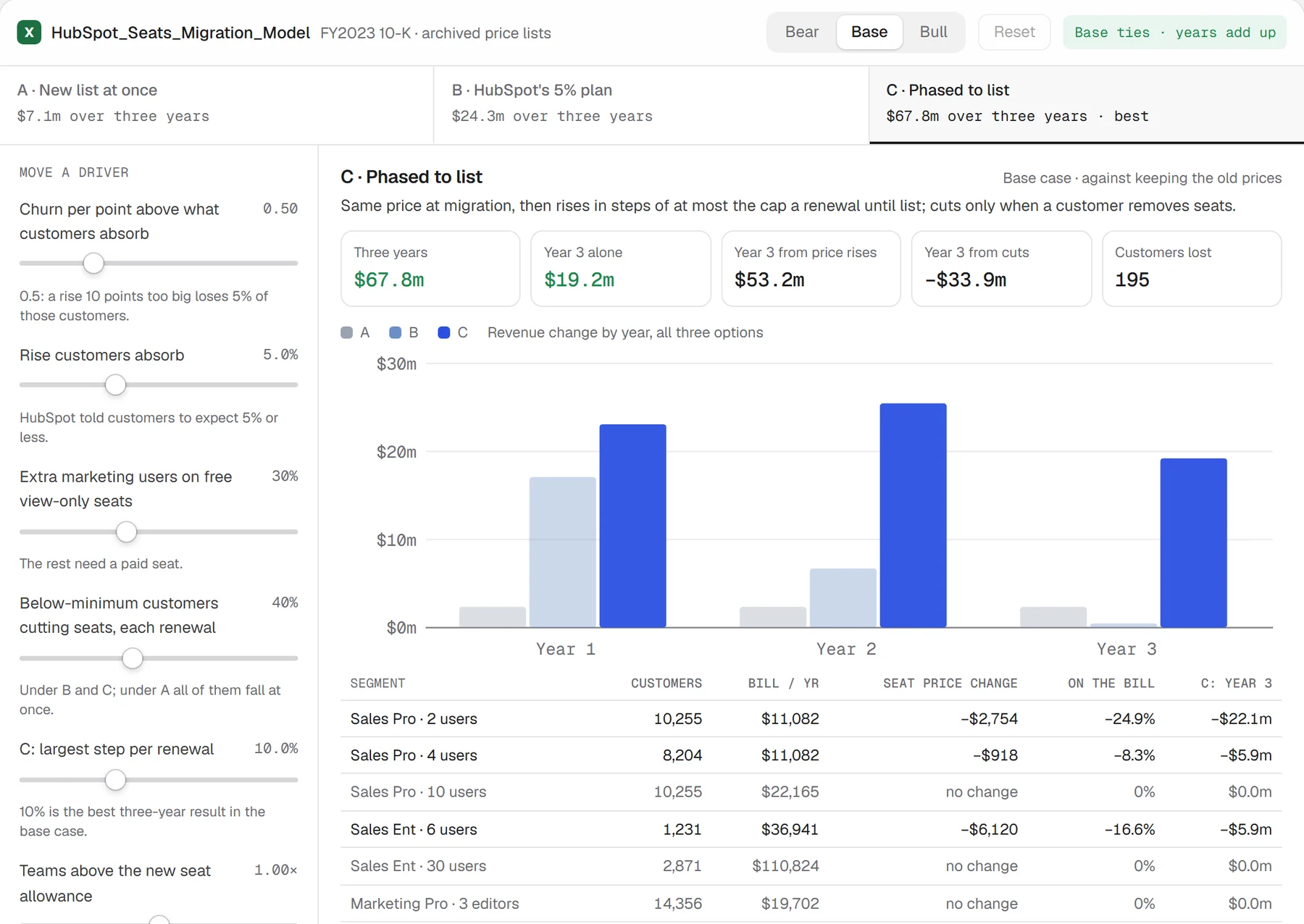
The HubSpot seats pricing model: three ways to move existing customers to per-seat prices, their three-year value by scenario, and the driver sliders.

HubSpot seats pricing migration

A pricing case on HubSpot's 2024 move to per-seat pricing: a memo and an Excel model on how to migrate its existing customers, built from its filings and archived pricing pages. It shows pricing work: sizing revenue at risk, testing price sensitivity and setting rollout and rollback rules.

  • Pricing
  • Unit economics
  • Executive memos
Open the case
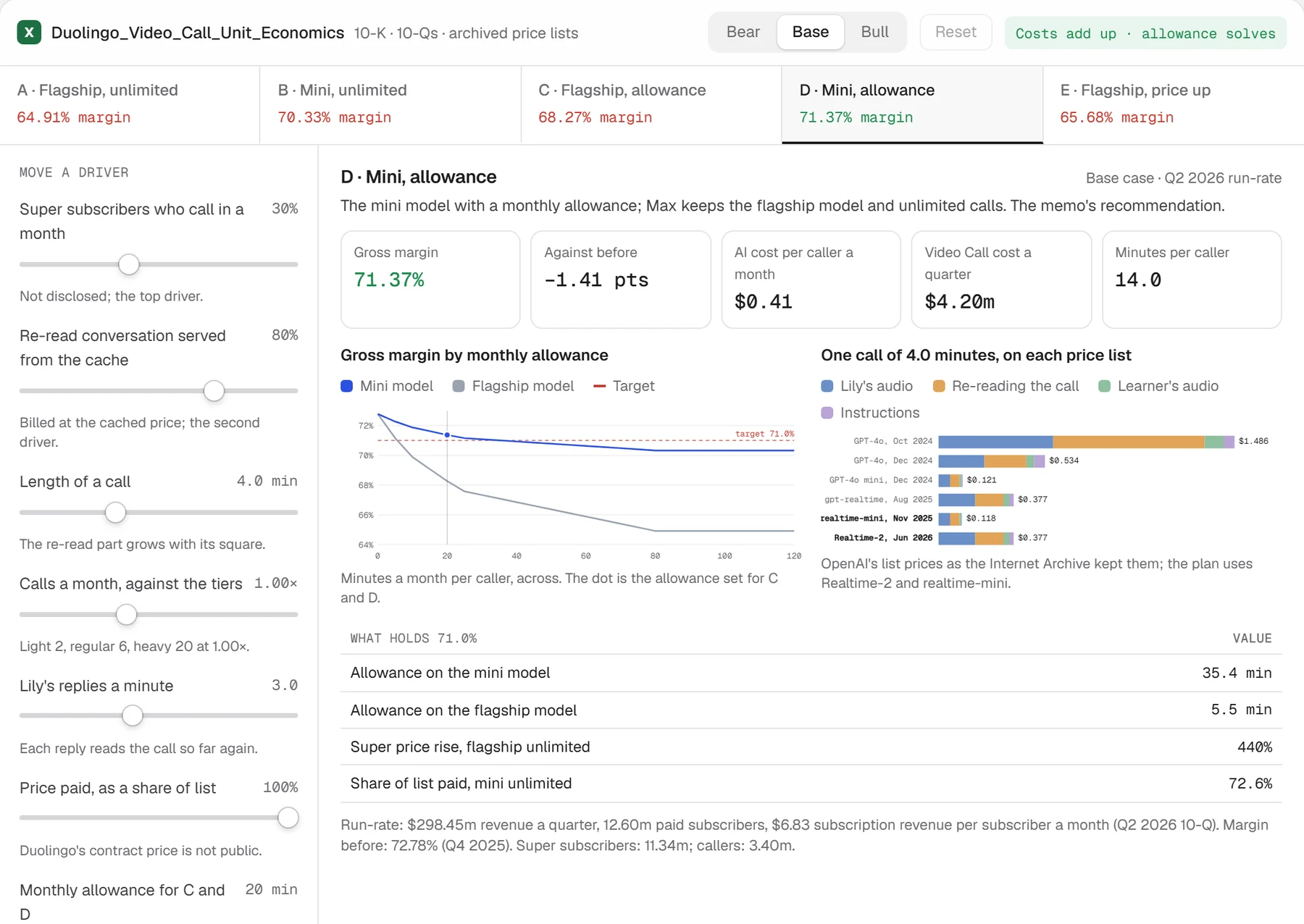
The Duolingo Video Call model: five ways to bring the AI conversation feature into the Super tier, each with its gross margin, and the driver sliders.

Duolingo Video Call: AI cost and gross margin model

A unit-economics case on Duolingo's move of its AI conversation feature into the Super tier: a memo and an Excel model that price each call on archived API price lists. It shows compute-cost modeling, usage-based packaging and reconciling a model to a company's own disclosures.

  • Unit economics
  • Compute cost
  • Pricing
Open the model
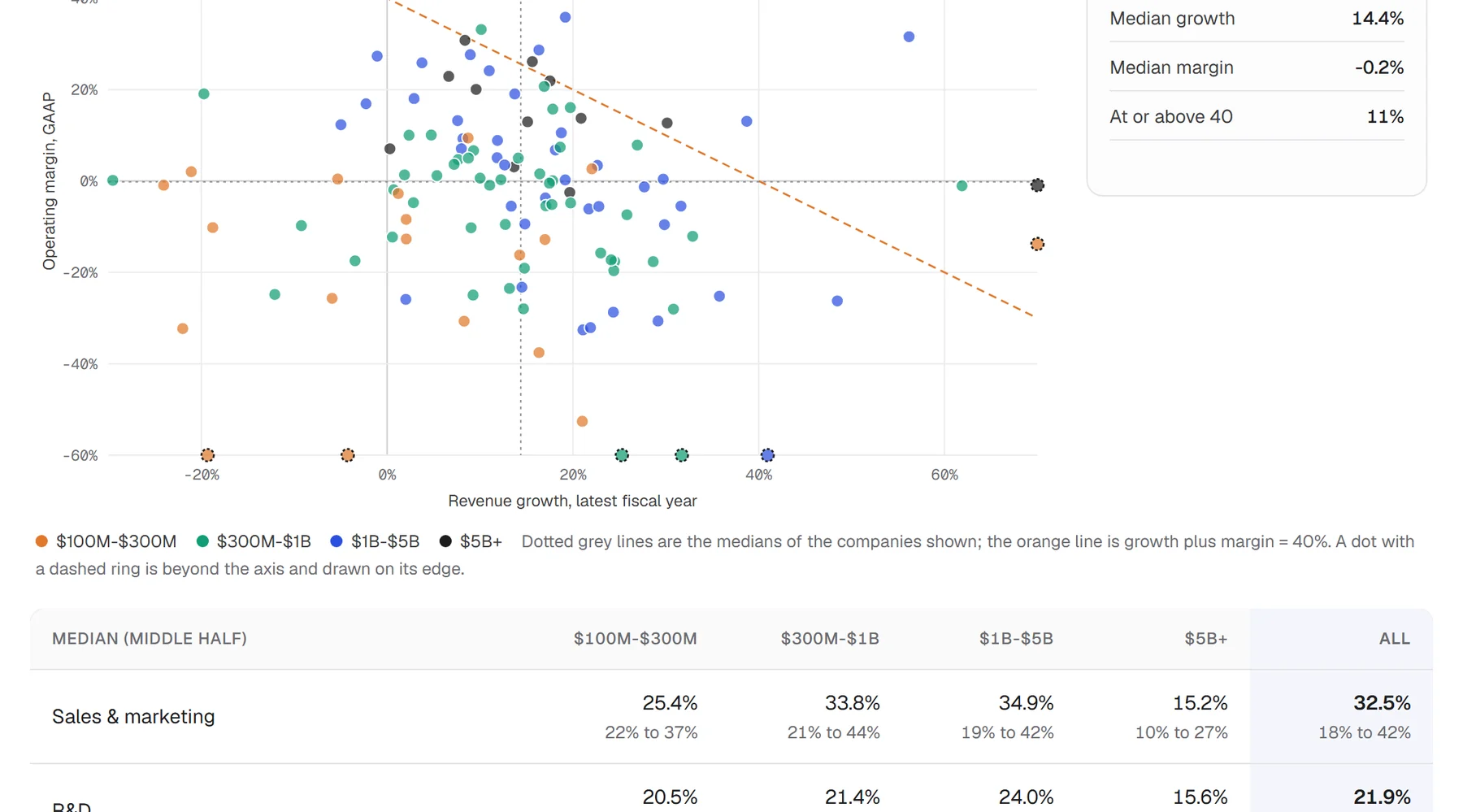
The software spending benchmark: revenue growth against GAAP operating margin for 124 US-listed software companies, with the Rule of 40 line.

Software spending benchmark

A benchmark of what 124 US-listed software companies spend on sales and marketing, R&D and G&A, built in SQL from SEC filings. It shows working with large, messy public data and turning it into planning targets.

  • SQL and data
  • Benchmarking
  • Opex planning
Open the benchmark
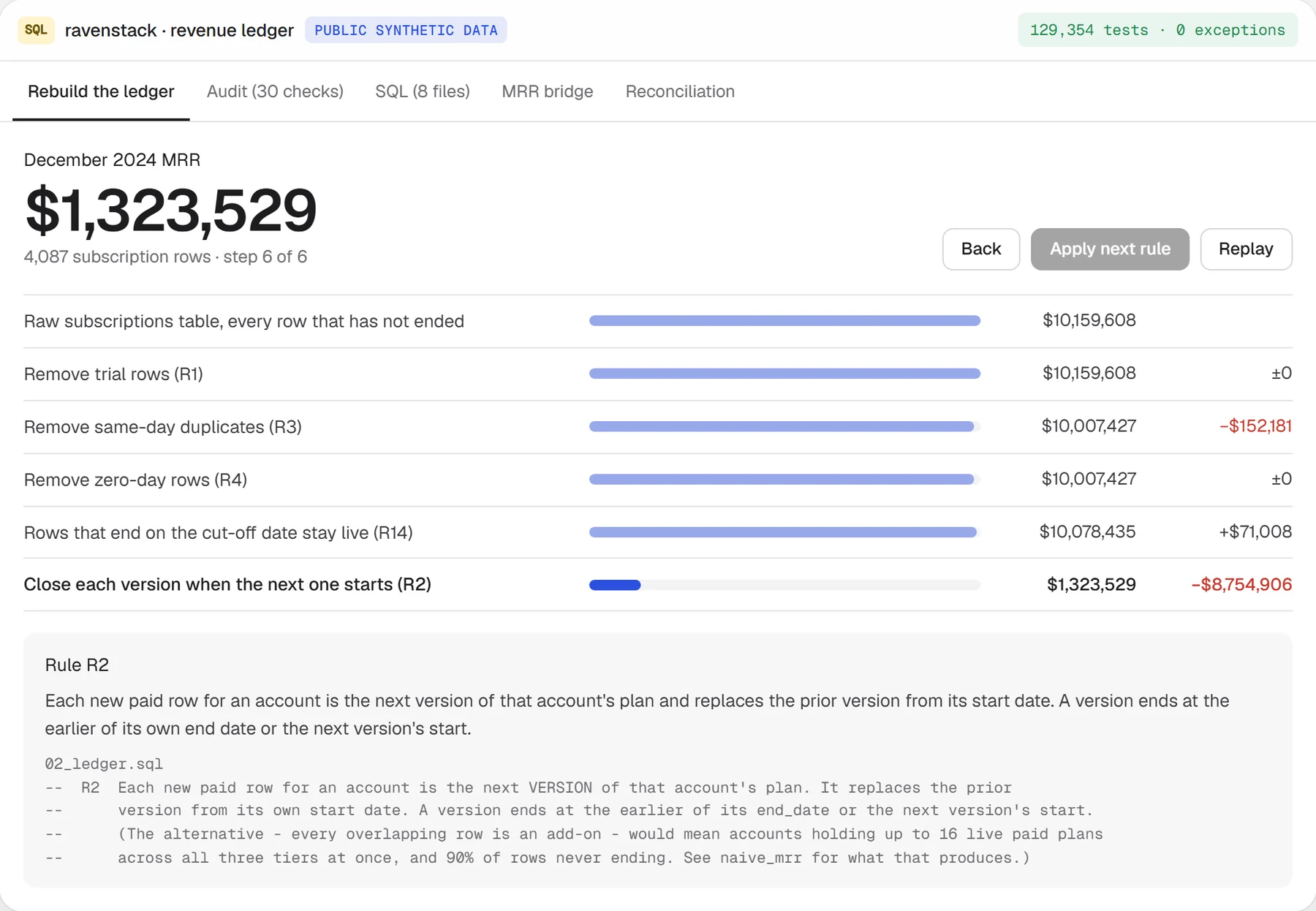
The SaaS rebuild: each cleaning rule applied in turn, taking December MRR from $10,159,608 in the raw table to $1,323,529.

SaaS revenue ledger

A subscription revenue ledger rebuilt in SQL from a public SaaS dataset, with the MRR bridge and deferred revenue tied to the cent. It shows how I clean messy revenue data and make it reconcile.

  • SQL and data
  • SaaS metrics
  • Revenue reconciliation
Open the ledger
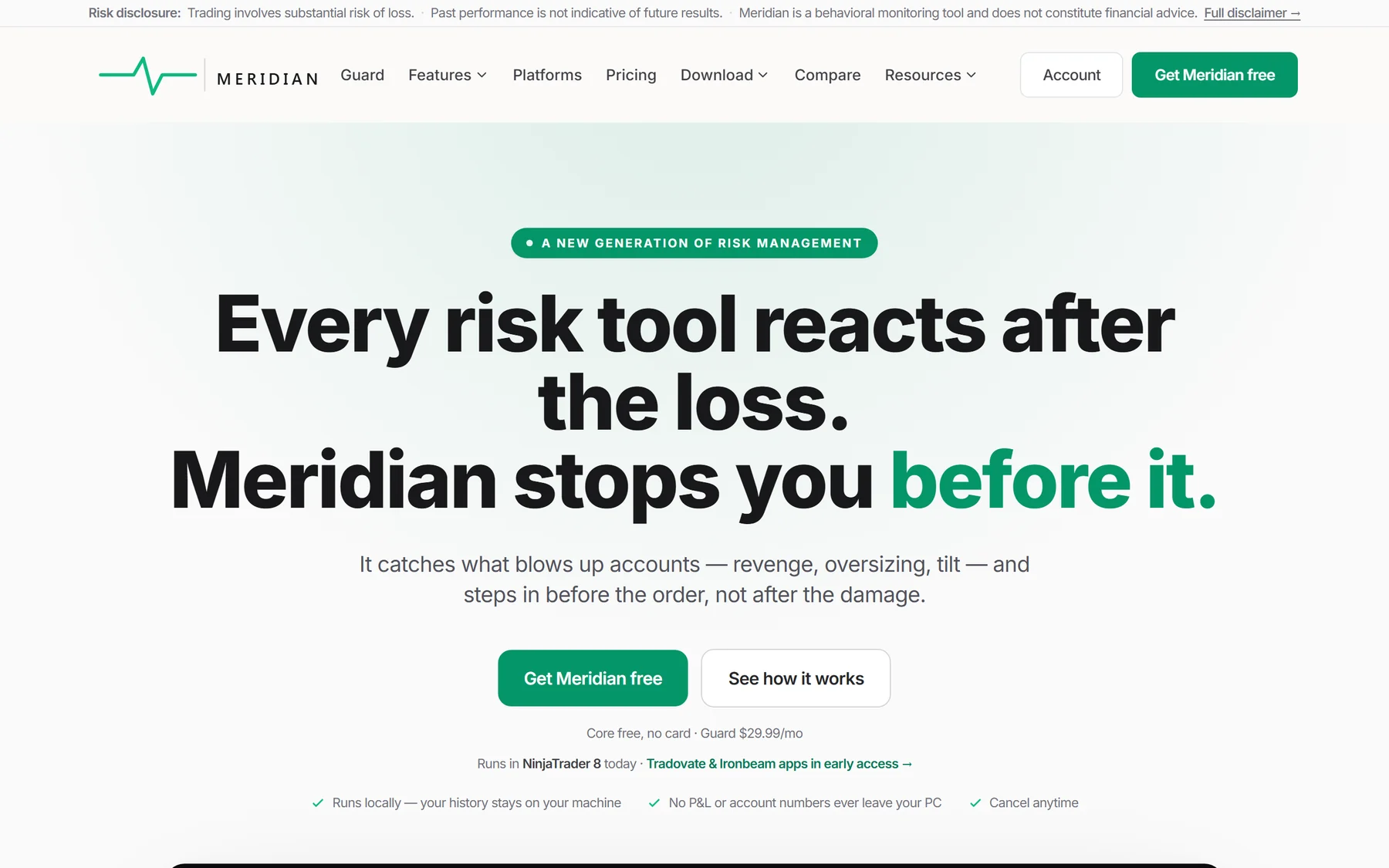
Meridian's website: real-time risk management for futures traders, on NinjaTrader, Tradovate and Ironbeam.

Meridian

Real-time risk-management software for futures traders that I founded in April 2026 and run myself, listed in the NinjaTrader Ecosystem. It shows owning a whole product: engineering, pricing, affiliates, marketing and support.

  • Pricing
  • Go-to-market
  • Product
Read about Meridian
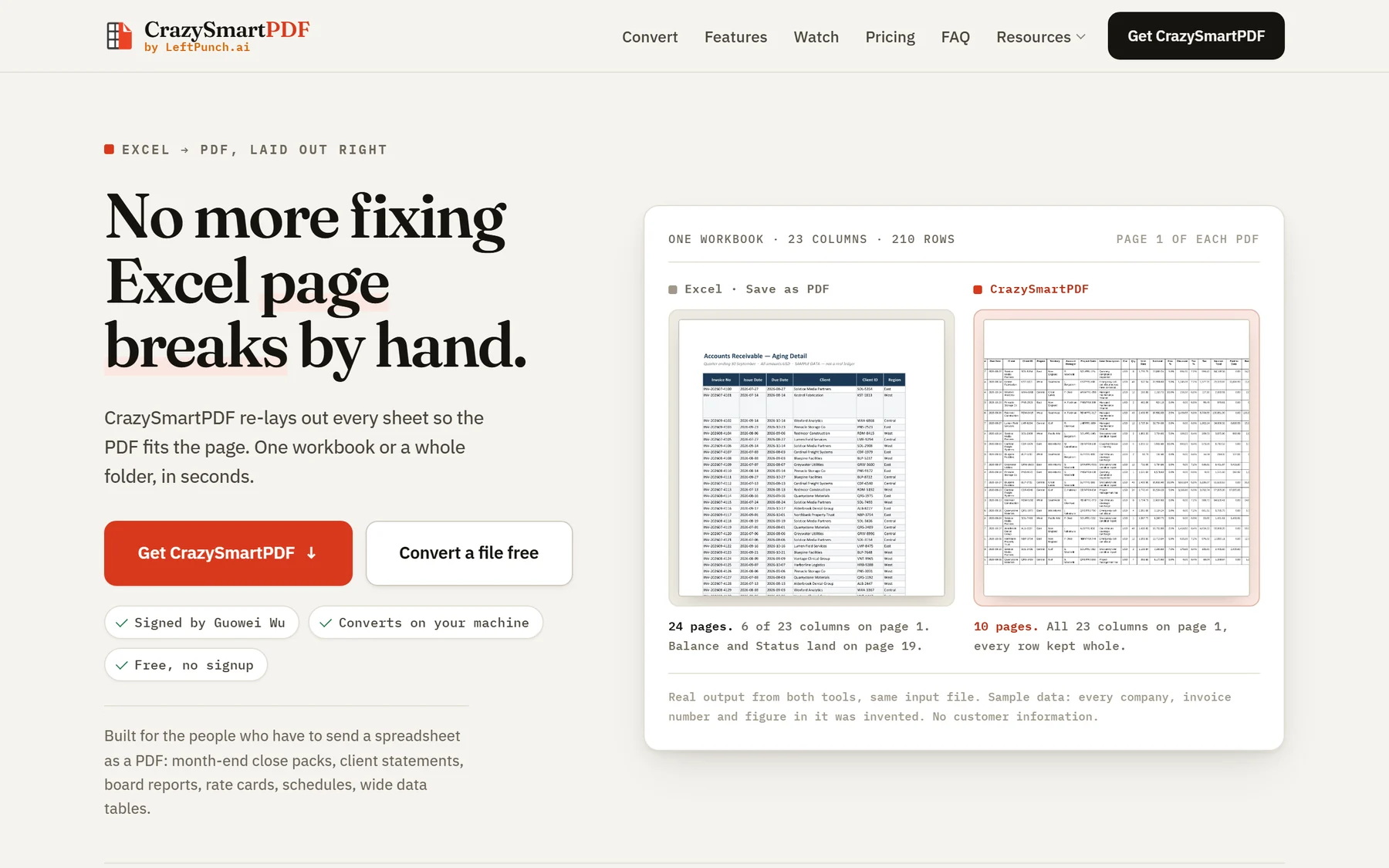
CrazySmartPDF's website: an Excel workbook laid out as a print-ready PDF, in one batch.

CrazySmartPDF

A Windows app and Excel add-in that turns Excel files into print-ready PDFs in one batch, live and free to download. It shows building and shipping a small product end to end.

  • Automation
  • Product
Visit crazysmartpdf.com

Skills

What I do

  • Budgeting and annual planning
  • Forecasting, run-rate and headcount-driven
  • Variance analysis and commentary
  • Month-end close, accruals and reclasses
  • Billing and reconciliation
  • Three-statement and scenario modeling
  • Revenue and MRR analysis
  • Dashboards and reporting
  • Process automation and controls

Tools

  • Excel (Power Query, Power Pivot, VBA)
  • SQL
  • Python (pandas)
  • C#/.NET
  • Next.js + SQLite
  • Power BI
  • Tableau
  • NetSuite
  • Sage Intacct
  • Adaptive
  • Pigment
  • Anaplan
  • Salesforce
  • Zuora
  • AI agents (Claude Code)

Languages

  • English
  • Mandarin
  • Cantonese

About

Financial analyst at a Bay Area housing services organization since 2022. B.A. in Economics, UC San Diego, 2022. Founder of Meridian since April 2026.

I run an AI agent system that writes code and workbooks to my spec. Every project on this site was built that way: I set what it had to do, reviewed every result, and a separate check recomputes the figures from the source data. The two from work are rebuilt on made-up data; the real numbers are confidential.

  • Financial AnalystBay Area housing services organizationMay 2022 – now
  • Founder & OperatorMeridian, real-time risk-management software for futures tradersApril 2026 – now
  • B.A. EconomicsUC San Diego, minor in Business Administration2022